ART · HISTORY · DOCUMENTATION
Artistic practice
Artistic practice
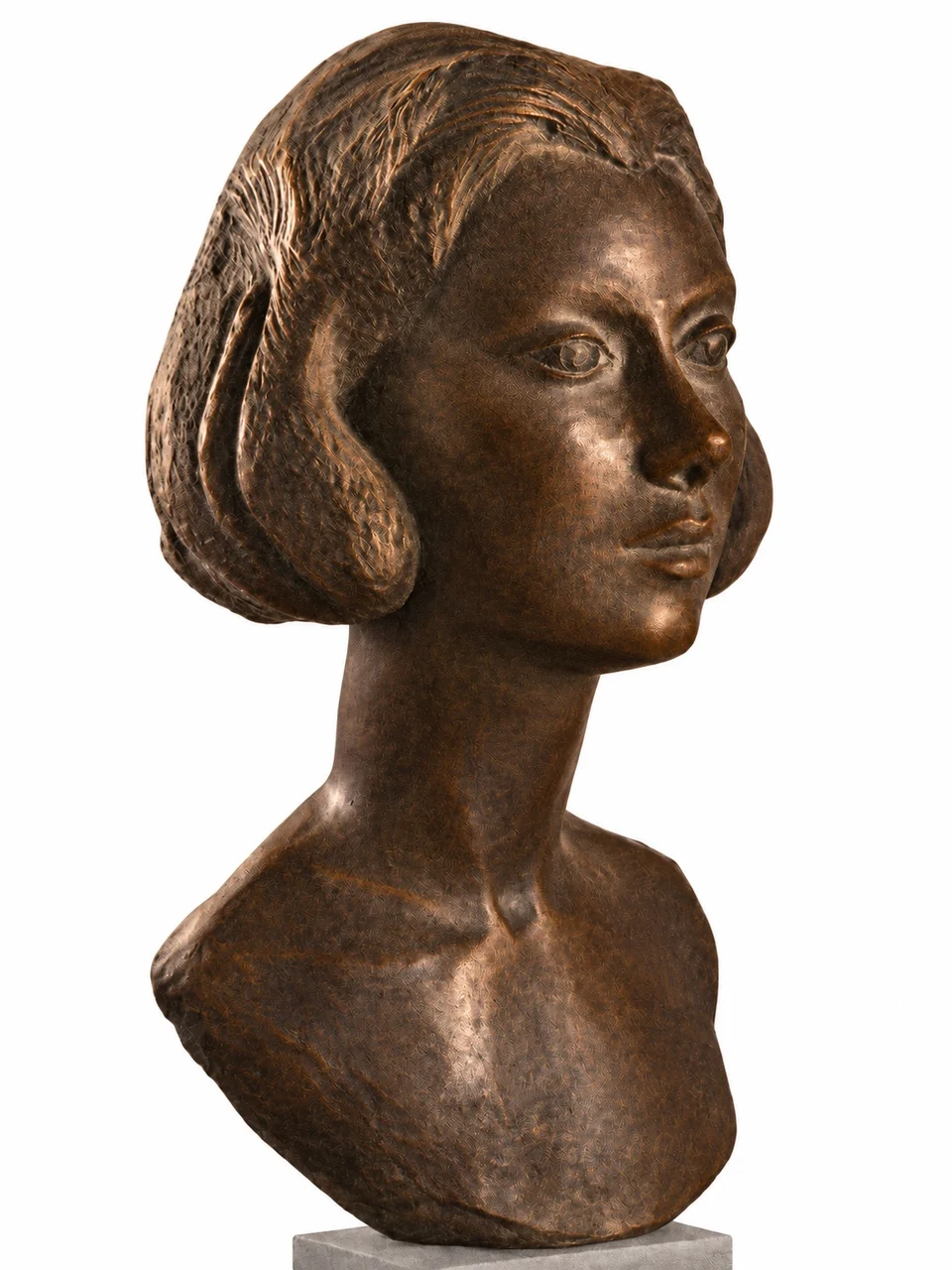
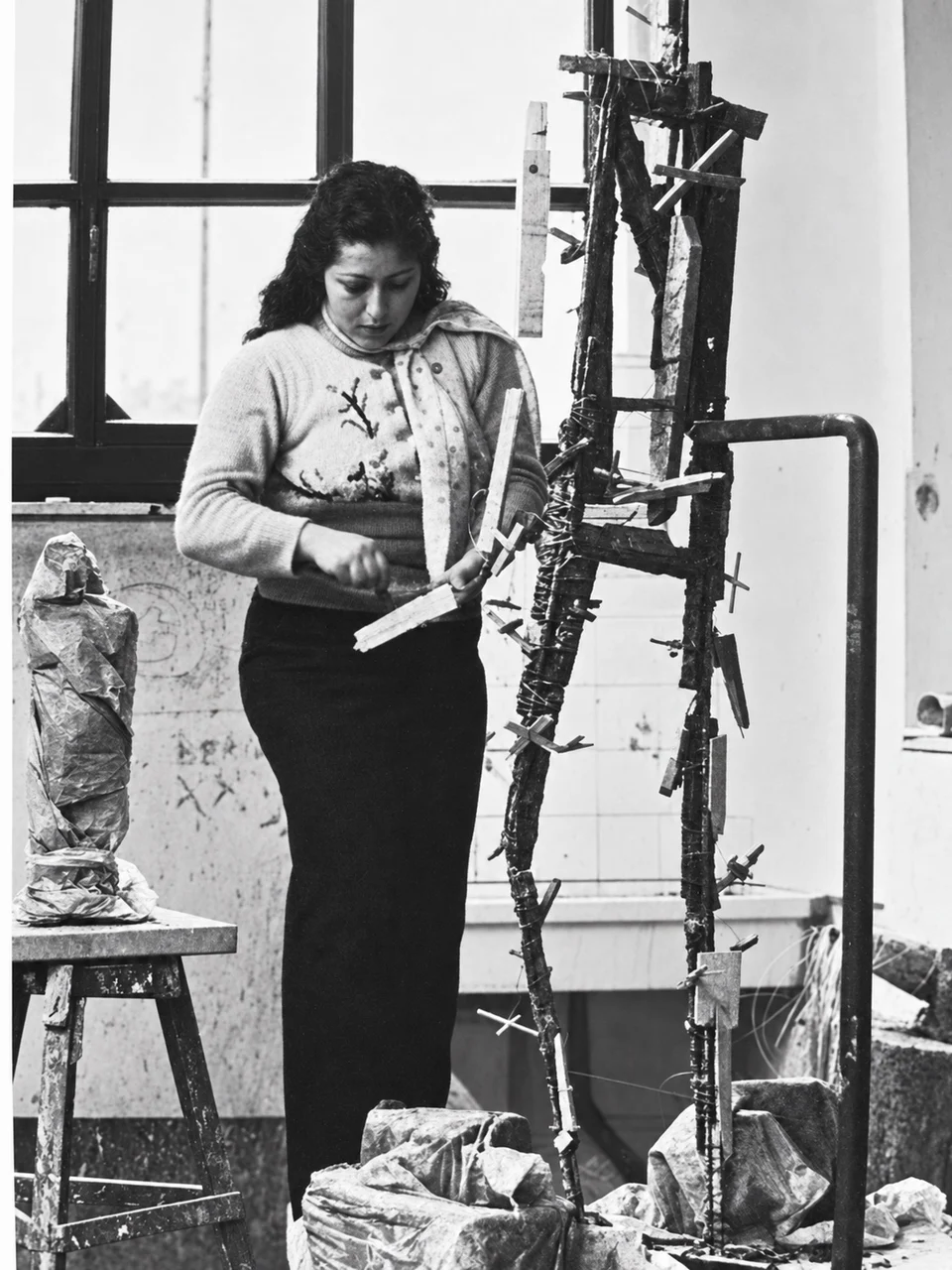
Her work spans painting, sculpture, ceramics and graphic art. She worked with wood, piperno, tuff, alabaster, bronze and marble. In painting she used gouache, tempera, oils and pastels, among other techniques. Franco Pata also recorded mothers and children and nudes in wood and cement. Documentary source.
Human figures, portraits, dancers, landscapes, mothers and children, and religious subjects recur throughout her work. Movement and the expression of faces hold a particular place in her practice. Even as her technique changed, her attention to human presence and emotion remained recognisable.
Sources for this page
The critical interpretation
In Lo scalpello di Elena, Pata interpreted the variety of materials as a continuing search for expressive possibilities. He identified classical references, echoes of Sumerian art in certain reliefs, post-Impressionist sensibilities and references to Degas in the dancers, and Impressionist and Expressionist accents in some religious subjects. These are Pata’s interpretations, not an exclusive classification of the artist within one movement.
Sculpture and ceramics: dance and movement
Page 143 of Linea Figurativa 1978 reproduces a ceramic dancer from several viewpoints. Its caption includes “visualizzazione – 1976”. This is retained as the caption’s wording, not treated as a verified production date. The figure on a spherical base provides a documented example of the artist’s interest in movement and balance.
A visual reading of this reproduction suggests an elongated, stylised body and a carefully considered relationship between pose and base. This observation concerns this particular work and is not automatically extended to the artist’s entire production. The published price of three million lire is historical documentary information, not proof of sale or a current valuation.
Work record EP-O0017 · Documentary source · EP-F0040.